
1. Why Building a Garden Room in Surrey Is Different
Surrey is one of the best places in the UK to add a garden room -- but it can also be one of the most technically demanding. Clay soils, mature trees, drainage runs, access constraints and stricter local oversight can all affect what's possible and what it will cost.
Before thinking about bifolds, cladding or a "Pinterest finish", you need to understand what sits beneath the build. In Surrey, foundations determine everything.
2. Planning Permission in Surrey -- What to Check First
Not every garden room needs planning permission, but Surrey has a high number of conservation areas, TPOs (Tree Preservation Orders), and sensitive boundary restrictions -- so it's worth checking early.
- Overall height (especially ridge height)
- Distance to boundaries
- Whether the property is listed
- Whether you're in a conservation area
- Whether any trees are protected
Local authorities you may be dealing with include Elmbridge, Guildford, Mole Valley, Woking and Runnymede. Even if planning isn't required, Building Regulations approval often still is.
Elmbridge Borough Council planning portal
UK permitted development technical guidance (GOV.UK)
3. Trees Within 30 Metres -- Why They Matter
One of the biggest hidden issues in Surrey is tree influence. Building Control can assess trees within roughly 30 metres of the proposed build because trees extract moisture from clay soils.
Clay shrinks when dry and swells when wet. Mature, high water-demand trees can significantly increase required foundation depth.
High water-demand trees to watch out for
- Oak
- Willow
- Poplar
- Elm
- Plane
- Eucalyptus
Medium demand (still worth checking)
- Sycamore
- Birch
- Cherry
4. Surrey Soil Conditions -- Understanding Clay
Clay is extremely common across Surrey (Elmbridge, Weybridge, Esher, Molesey, Cobham and surrounding areas). Clay isn't "bad" -- it just moves. Shrinkage and heave can affect foundations if not designed properly.
This is why foundation choice should be based on site conditions, not assumptions.
5. Foundation Options for Garden Rooms in Surrey
Strip foundations
Traditional and widely used. However, in Surrey -- particularly where high water-demand trees influence shrinkable clay -- required depths can increase significantly.
It is not uncommon for Building Control to require foundation depths of 2.0m -- 2.5m+ where mature trees are present. At that point excavation becomes labour intensive, spoil heavy, and more expensive than most homeowners expect.
Reinforced raft foundations
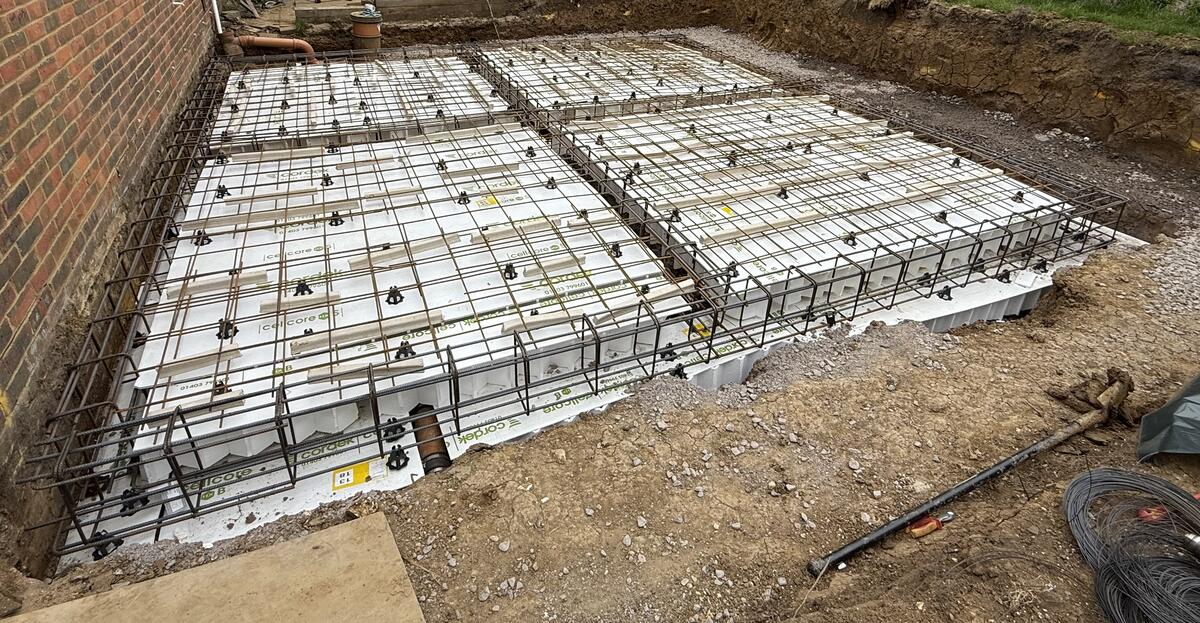
A structural slab distributing loads evenly. Often paired with heave protection boards (such as Cellcore), reinforcement cages and structural engineer calculations. It's a strong solution for shrinkable clay, but costs are higher.
Piled foundations
Mini-piles driven or bored to stable strata, connected with reinforced beams. Useful where clay depth is significant or where loads/ground conditions demand it.
Ground screws
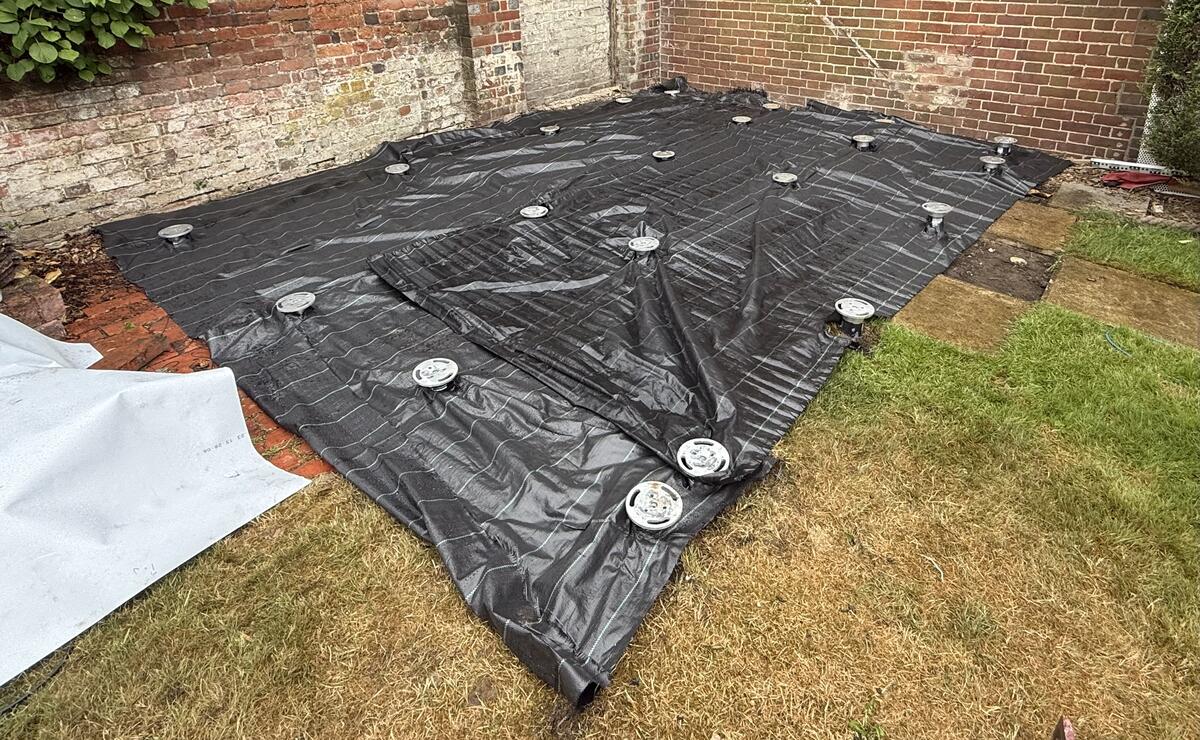
Increasingly popular for garden rooms because they reduce excavation and can speed up installation. However, pull tests are usually required, soil suitability must be confirmed, and structural sign-off may still be necessary.
6. Never Pour Concrete Without Approval
Foundations should be inspected by Building Control before concrete is poured. This typically includes depth verification, reinforcement inspection and ground condition approval.
I've seen Building Control find a reason to make people dig out non-approved work. It's not worth the risk. Get it signed off, then pour.
7. Drainage & Services -- Don't Ignore This
Drainage is frequently the overlooked constraint. If drainage runs beneath the proposed footprint, you may need rocker joints, protective sleeves, or to consider alternative foundation types.
If services have to cross through foundations, planning this early avoids expensive redesign later.
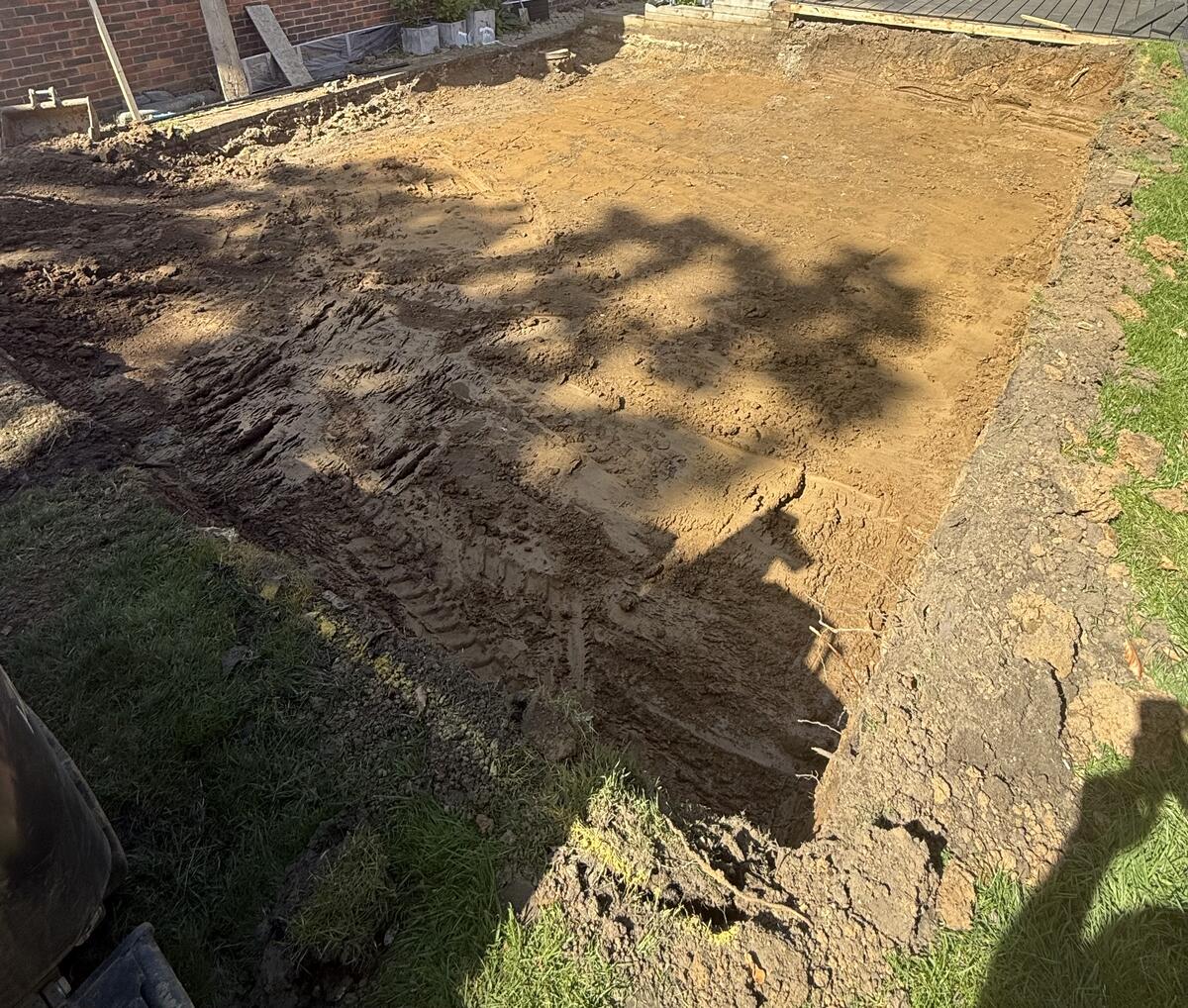
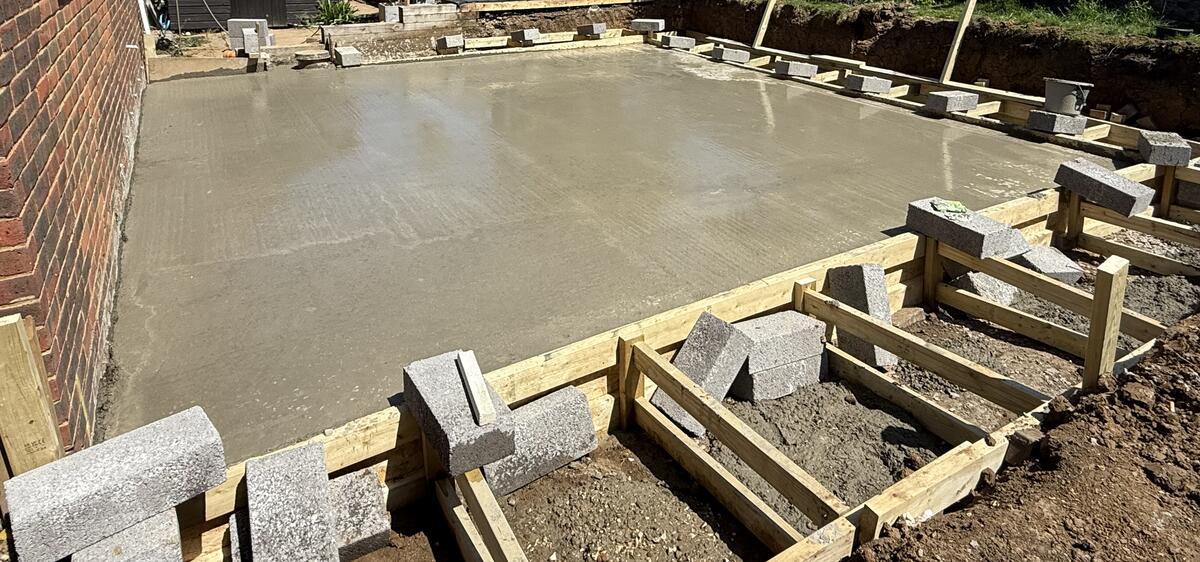
8. Real Foundation Process (Photos)
These are real-world examples of groundwork stages from our Surrey garden room builds.
9. SIP Garden Rooms Explained
Structural Insulated Panels (SIPs) offer high insulation performance, structural stability and fast build times. They're ideal for year-round spaces when designed and installed correctly.
10. Finishes Beyond Cedar & Composite
Most people assume garden rooms are only cedar/composite "boxes" -- but SIP structures allow a versatile range of external finishes:
- Western Red Cedar
- Composite cladding
- Cement board with render
- Brick slips
- Painted board systems
- Mixed material architectural finishes
SIPs are the structure. The finish is your design choice.
11. Realistic Cost Expectations in Surrey
Groundworks and foundations can swing costs dramatically in Surrey depending on tree influence, clay behaviour, drainage complexity and access. Two identical garden rooms can have very different foundation costs purely because of what's underground.
12. Common Mistakes to Avoid
- Ignoring tree influence
- Underestimating clay movement
- Pouring foundations before Building Control approval
- Choosing a foundation type based solely on price
- Failing to consider drainage and services early
Garden rooms built correctly can last decades. Garden rooms built cheaply often reveal problems within years.
Frequently Asked Questions
Do I need planning permission for a garden room in Surrey?
Many garden rooms fall under permitted development, but this depends on height, boundary distance, conservation status and property type. Always verify with your local authority before building.
How deep do foundations need to be in Surrey?
Foundation depth varies depending on soil type and nearby trees. In clay-heavy areas with mature trees, depths can exceed 2.5 metres where tree influence is significant.
Are ground screws suitable for Surrey clay?
Ground screws can be suitable in many cases, but pull testing and soil assessment are essential. Structural approval may still be required.
Do trees always increase foundation depth?
Not always, but high water-demand trees such as oak, willow and poplar commonly increase required depths in clay soil conditions.
What is the typical cost of a garden room in Surrey?
Costs vary depending on size, finish and foundation requirements. Site conditions often have the biggest impact on final pricing.
If you want to explore designs, see real builds, or talk through a site survey, start here: