Structural Insulated Panels (SIPs) are one of the most advanced construction methods used in modern building. At Helps & Co Design Build, we use SIPs to create highly insulated, airtight, and durable structures that perform all year round.
A Structural Insulated Panel is a prefabricated building panel made from two outer boards of OSB (oriented strand board) bonded to a rigid insulation core. The core is typically a high-performance foam such as polyurethane or expanded polystyrene.
Because the panels are manufactured in a controlled factory environment and then delivered to site as a complete kit, the result is a structurally consistent, well-insulated shell that goes up far quicker than traditional construction.
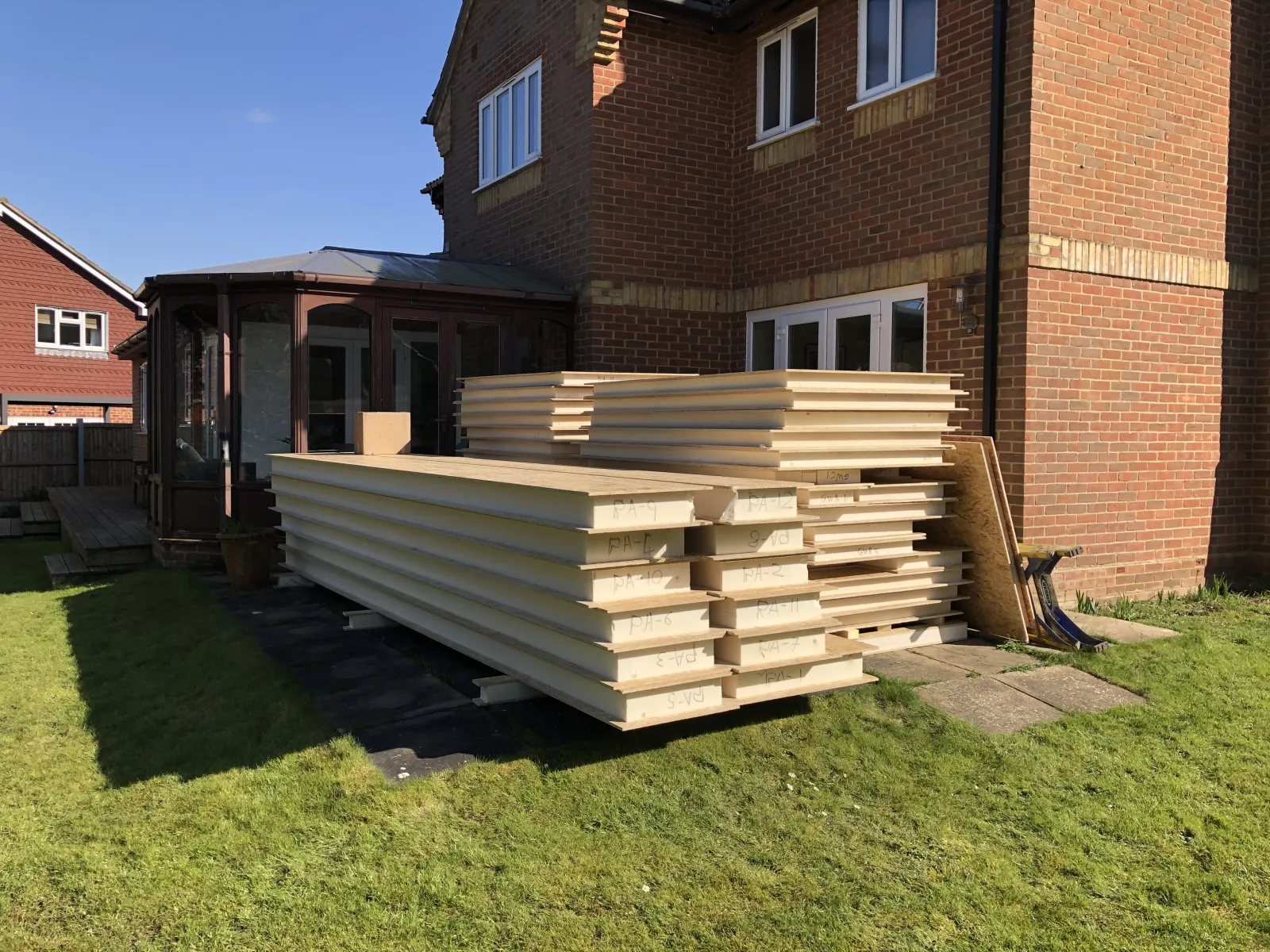
SIP panel cross section showing insulation core and OSB layers
SIPs follow a simple but precise process. Each panel is cut to size in the factory based on the building design — including window and door openings — before being delivered to site as a numbered kit.
On site, the panels are installed in sequence: floor, walls, then roof. Because everything has been engineered in advance, the full structural shell is typically up and weathertight in a fraction of the time of conventional construction.
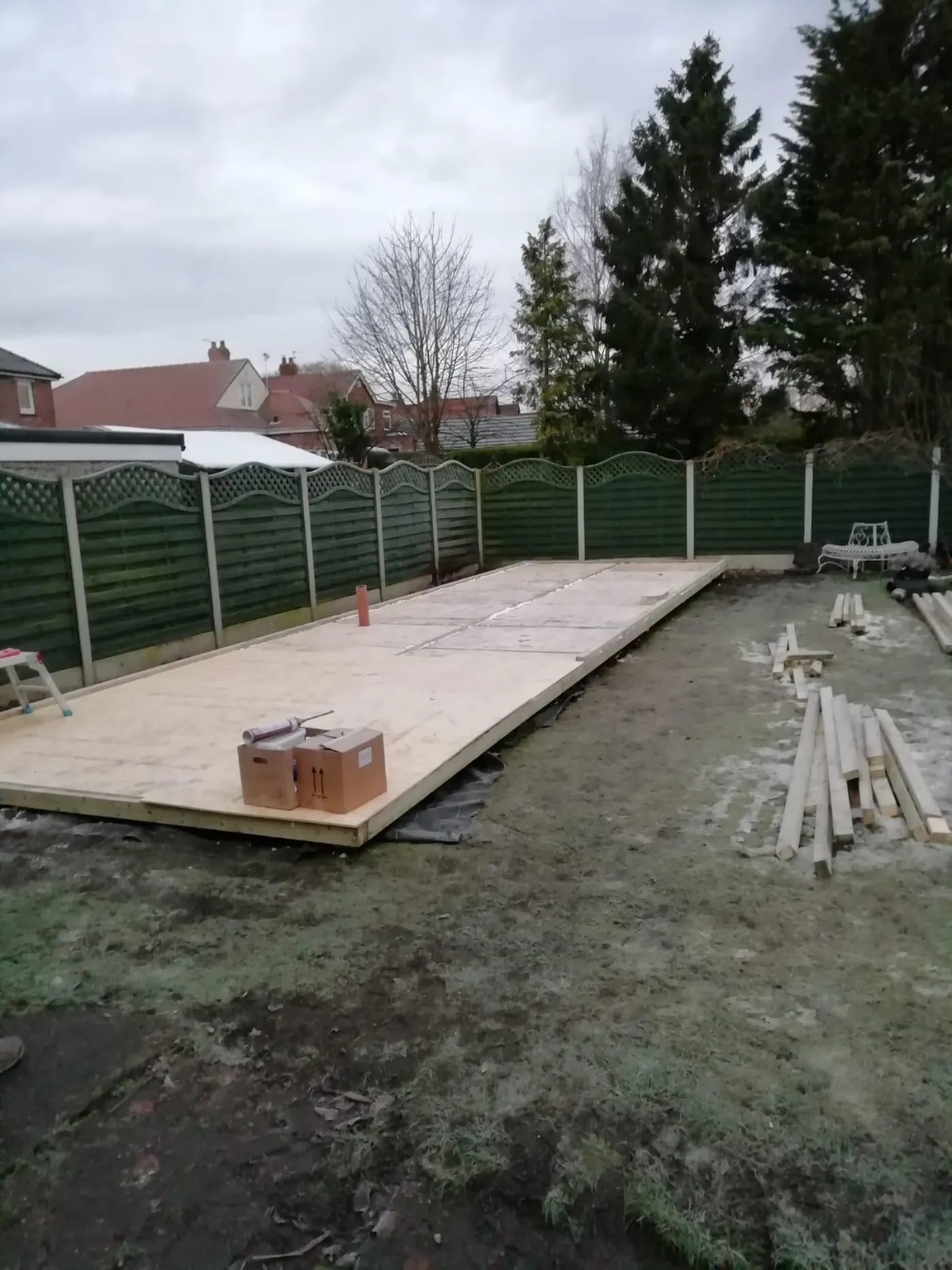
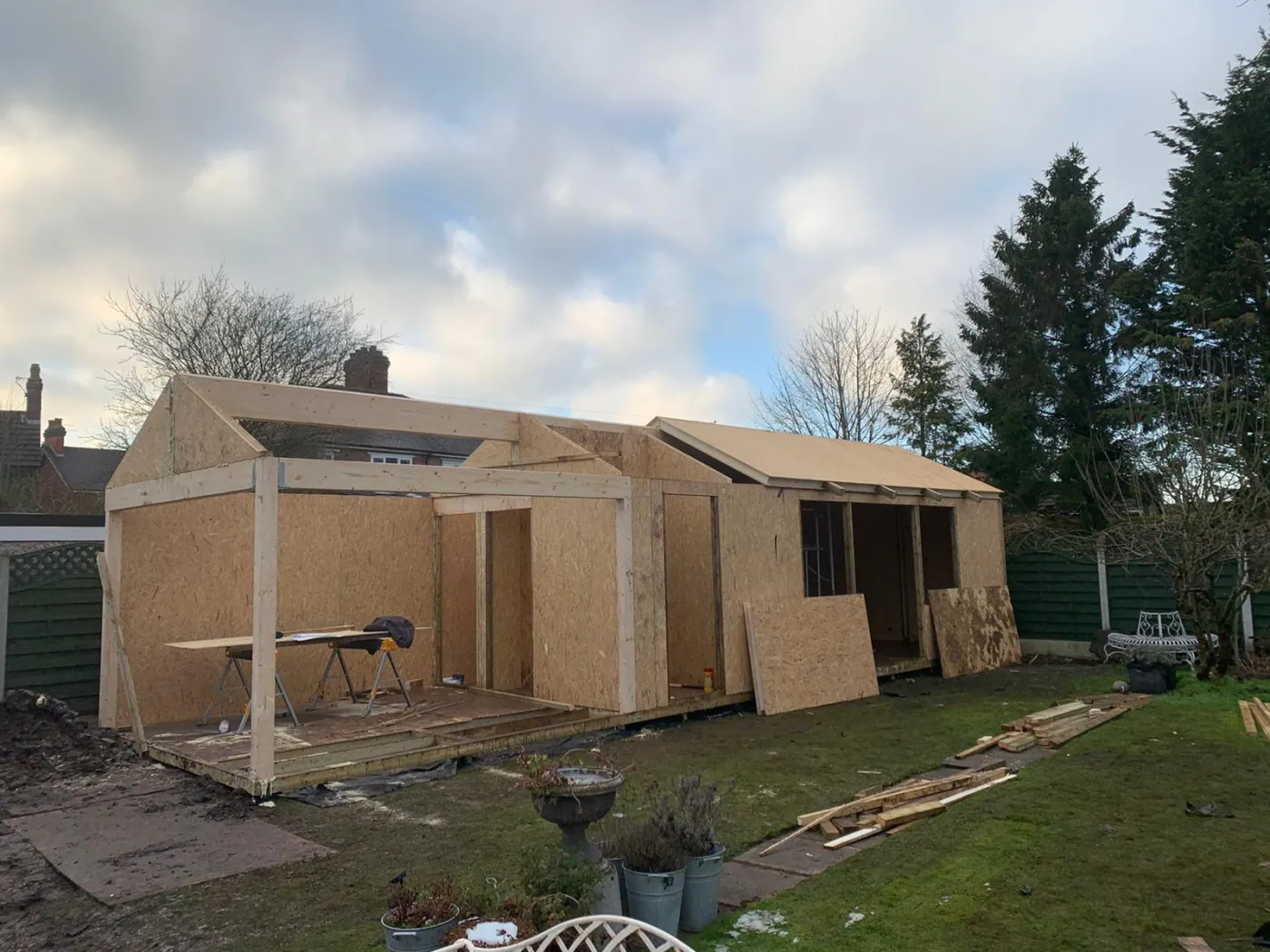
Because the panels combine insulation and structure in a single component, SIPs deliver several advantages over traditional methods.
Timber frame and SIPs both produce well-built timber structures, but the way they handle insulation and airtightness is fundamentally different.
A studwork frame built on site, with insulation cut to fit between the studs. Layered, with potential for small gaps and thermal bridging at every junction.
A solid, prefabricated panel where structure and insulation are bonded into one continuous element — airtight, consistent, and with far fewer cold spots.
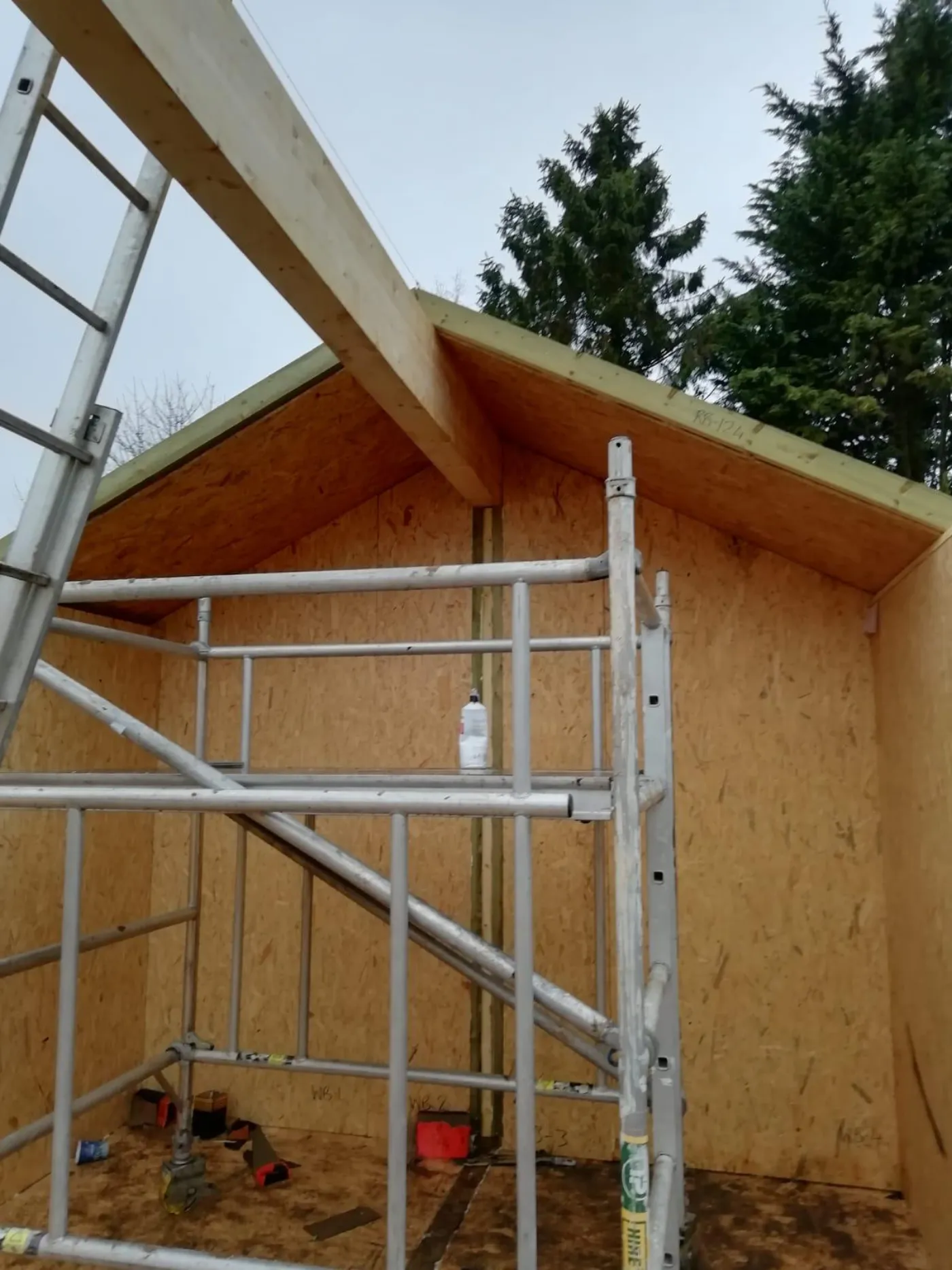
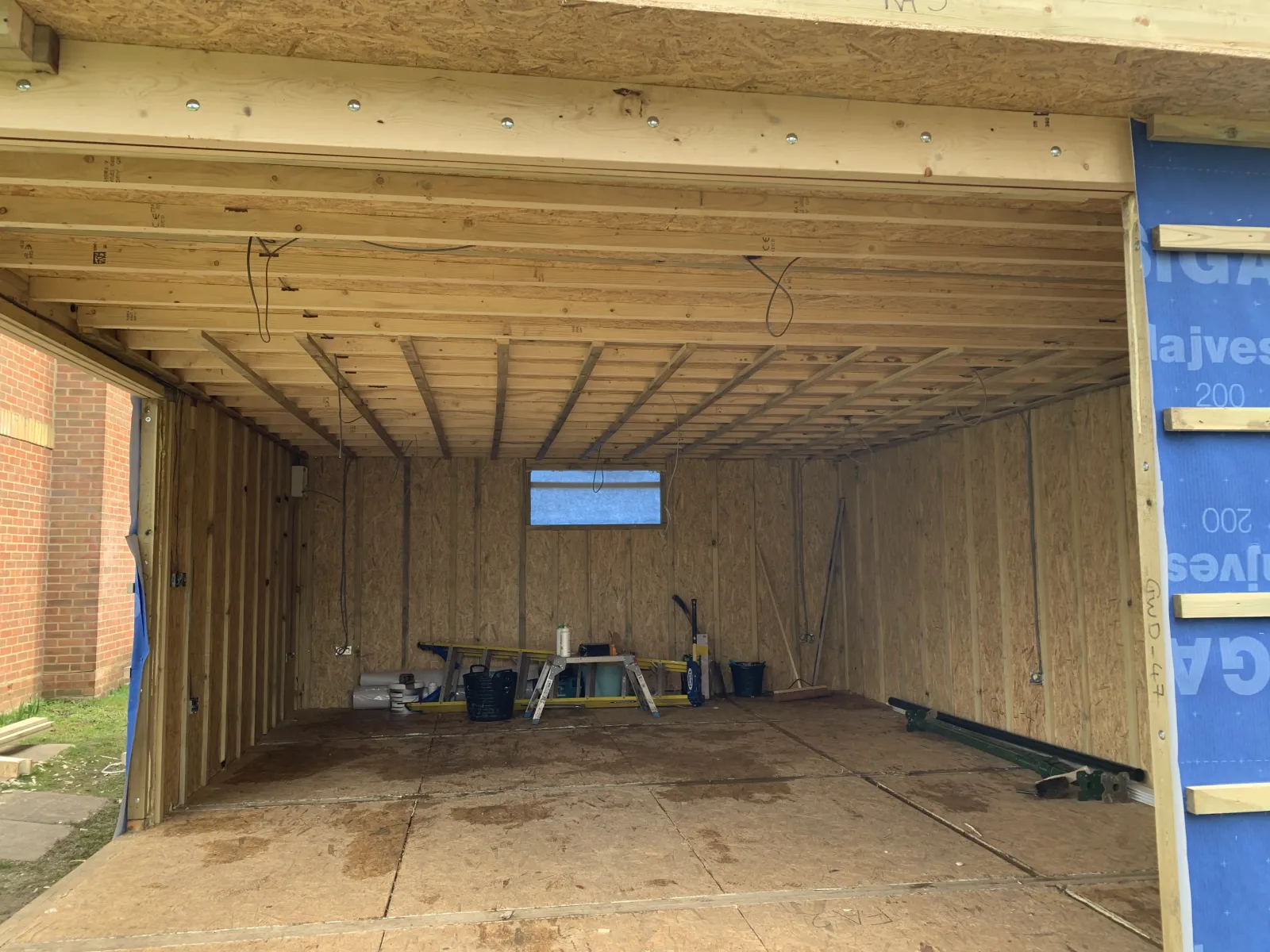
Inside a freshly built SIP shell, you see the inner OSB face of the panels — a clean, structural surface ready for services and finishes. There are no large voids, no exposed fluffy insulation between studs, and the walls feel notably solid when knocked.
OSB itself is a structural board engineered for strength and stiffness, which is why it can carry the loads in place of conventional studwork. The result is a quiet, well-defined interior that's straightforward to plasterboard, panel, or clad to finish.
SIPs are used across a wide range of buildings where insulation, airtightness, and build speed matter.
We chose SIPs for our garden room builds because they let us deliver consistently high performance without compromise. The panels give us a thermal envelope that works just as well in mid-summer as in mid-winter, and the factory-finished build quality means there's far less variance from one project to the next.
It's also a method we trust. Once a SIP shell is up, we know exactly what's behind the finishes — which matters when we're handing over a building that should still be performing twenty or thirty years from now.
You can see how this method translates into finished projects across Garden Rooms Surrey.
SIPs sit at the higher end of the market in terms of upfront construction cost. In return, you get a building that's better insulated, more airtight, and structurally more consistent than a typical equivalent.
For a project that's intended to last and to be used year-round — whether that's a home, an annex, or a serious garden room — the long-term performance generally justifies the investment. SIPs are the premium choice when build quality and energy performance are a priority.
If you're considering using SIPs for your project and want honest advice, we're happy to help.
Book a Free Consultation